New models, new prices, new agent tools, all the time. Our new AI newsletter gives you the handful of stories you actually need as a developer.
 2 weeks ago
22
Gemini 4 Carbon is Google’s new reasoning model. It became generally available in the Gemini API on November 10, 2026, and it thinks longer than its sibling Argon before it answers.
In this tutorial, you’ll find out what Carbon is, when it’s worth paying for, and how to call it from Python. You’ll need a paid-tier Gemini API key to follow along.
By the end of this tutorial, you’ll understand that:
We first reported on Carbon in AI News Weekly for October 30, 2026, back when it was a limited preview for security defenders. If you’ve never set up an API key, then check out How to Integrate ChatGPT’s API With Python Projects.
Stop Falling Behind on AI. Catch Up in Five Minutes.
New models, new prices, new agent tools, all the time. Our new AI newsletter gives you the handful of stories you actually need as a developer. Free, straight from the Real Python team.
New models, new prices, new agent tools, all the time. Our new AI newsletter gives you the handful of stories you actually need as a developer.
Free, straight from the Real Python team. Unsubscribe anytime.
Google announced Carbon’s general release on November 10, 2026, in a post on its blog:
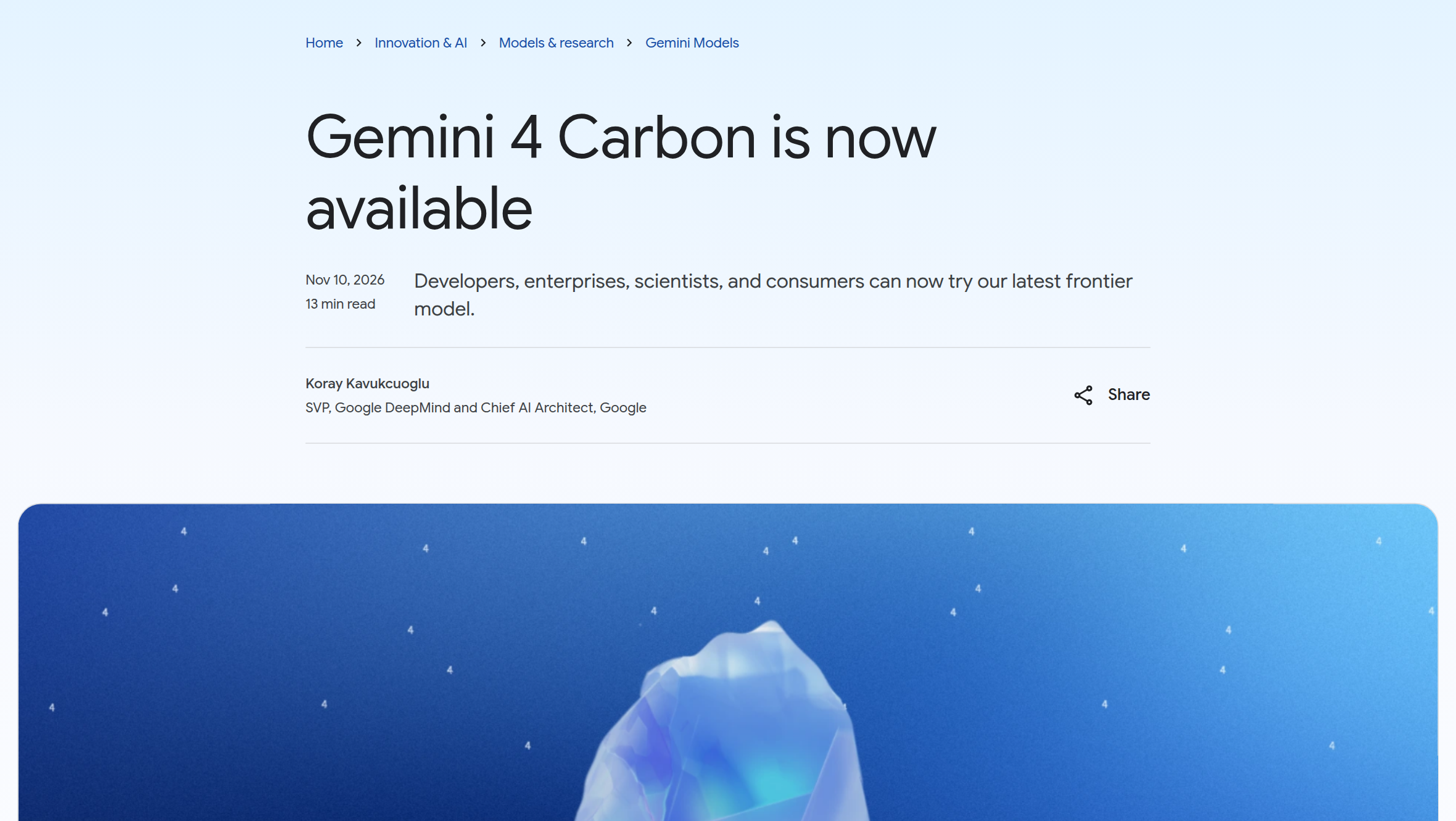 Google's general availability announcement for Carbon
Carbon is the newest top-tier model in Google’s Gemini family of large language models. It reads text, images, audio, video, and PDFs, and it writes text. Its context window holds about a million tokens, and its knowledge stops at March 2026.
According to its model card, Carbon is based on Argon, which became generally available in October 2026. Google’s what’s new page says the two share the same context window, built-in tools, and per-token pricing.
The difference is thinking tokens, which a model generates while it reasons, before it writes the answer you see. Carbon “spends more thinking tokens per turn to explore thoroughly and verify its work,” so each turn takes longer and uses more tokens than Argon’s.
[ Improve Your Python With 🐍 Python Tricks 💌 – Get a short & sweet Python Trick delivered to your inbox every couple of days. >> Click here to learn more and see examples ]






 English (US)